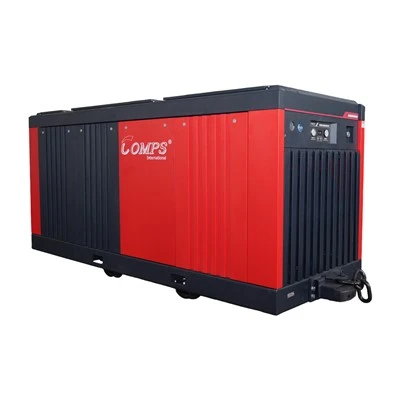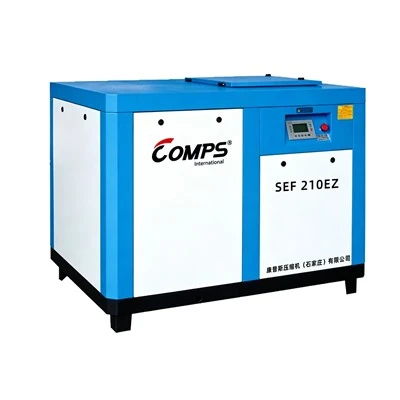
Hey there! As a supplier of Low-Pressure PM Inverter Air Compressors, I often get asked about the cooling methods for these amazing machines. So, I thought I'd sit down and explain it all in a simple way.
First off, let's understand why cooling is so important. Air compressors generate a lot of heat when they're working. If this heat isn't managed properly, it can lead to all sorts of problems. The performance of the compressor can drop, the lifespan of its parts can get shorter, and in extreme cases, it could even cause the compressor to break down completely. So, having an effective cooling method is crucial for keeping the compressor running smoothly and efficiently.
There are mainly two types of cooling methods used in low-pressure PM inverter air compressors: air cooling and water cooling. Let's take a closer look at each of them.
Air Cooling
Air cooling is one of the most common methods for cooling low-pressure PM inverter air compressors. It's simple, cost-effective, and relatively easy to maintain. The basic idea behind air cooling is to use the natural flow of air to carry away the heat generated by the compressor.
In an air-cooled compressor, there are usually fins on the outside of the compressor's cylinder or other hot parts. These fins increase the surface area of the compressor, allowing more heat to be transferred to the surrounding air. Then, a fan is used to blow air over these fins. As the air passes over the fins, it absorbs the heat and carries it away, effectively cooling the compressor.
One of the big advantages of air cooling is its simplicity. There are fewer components involved compared to water cooling, which means there are fewer things that can go wrong. It's also great for small to medium-sized compressors, as it doesn't require a complex water supply and drainage system. And if you're short on space, an air-cooled compressor is a good option because it doesn't need a lot of extra equipment.
However, air cooling does have its limitations. It's not as efficient as water cooling, especially in hot environments. If the ambient air temperature is high, the air may not be able to absorb as much heat from the compressor, which can lead to overheating. Also, air cooling can be a bit noisy because of the fan.
Water Cooling
Water cooling is another popular cooling method for low-pressure PM inverter air compressors. This method uses water to absorb and carry away the heat from the compressor.


In a water-cooled compressor, there are water channels inside the compressor's parts, such as the cylinder. Water is pumped through these channels, and as it flows, it absorbs the heat from the surrounding metal. The heated water is then sent to a radiator, where it releases the heat to the air. After that, the cooled water is pumped back into the compressor to repeat the process.
Water cooling has several advantages. It's much more efficient than air cooling, especially in hot climates. Water has a higher heat capacity than air, which means it can absorb more heat before it gets too hot itself. This allows the compressor to run at a lower temperature, which can improve its performance and extend its lifespan. Water cooling is also generally quieter than air cooling because there's no big fan making noise.
But water cooling also has some drawbacks. It's more complex and expensive to set up. You need a reliable water source, a pump to circulate the water, and a radiator to cool the water. There's also a risk of water leakage, which can cause damage to the compressor and other equipment. And if the water isn't properly treated, it can lead to corrosion inside the compressor.
Choosing the Right Cooling Method
So, how do you decide which cooling method is right for your low-pressure PM inverter air compressor? Well, it depends on several factors.
If you're using the compressor in a small workshop or a place where space is limited, air cooling might be the better choice. It's simple, easy to install, and doesn't require a lot of extra equipment. It's also a good option if you're on a tight budget.
On the other hand, if you're using the compressor in a large industrial setting or in a hot climate, water cooling is probably a better option. It can handle the heat better and keep the compressor running at a more stable temperature. This can lead to better performance and fewer maintenance issues in the long run.
As a supplier, I've seen firsthand how important it is to choose the right cooling method. That's why I always recommend talking to a professional before making a decision. You can also check out some of our other products, like ATEX-Certified Explosion-Proof Air Compressors, Oil Injected Screw Air Compressor, Magnetic Bearing Centrifugal Air Compressor, Inverter Single Stage Air Compressor, and Explosion Proof Screw Air Compressor.
If you're interested in our low-pressure PM inverter air compressors or have any questions about the cooling methods or our other products, don't hesitate to reach out. We're here to help you find the best solution for your needs. Whether you're a small business owner or a large industrial company, we've got the right compressor for you.
So, if you're in the market for a new air compressor or want to upgrade your existing one, give us a chance to show you what we can do. We're confident that you'll be happy with our products and our service.
References
- Compressor Handbook: A Guide to Air Compressor Technology and Applications
- Industrial Air Compressor Manuals
- Technical Papers on Compressor Cooling Systems