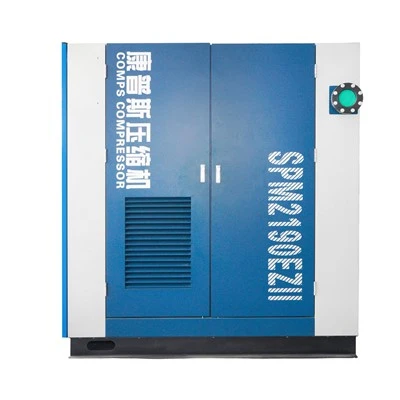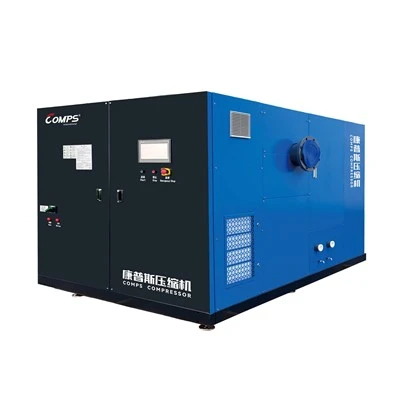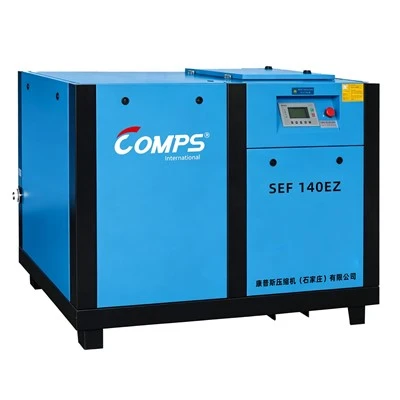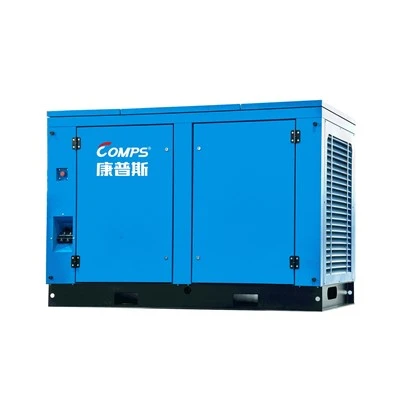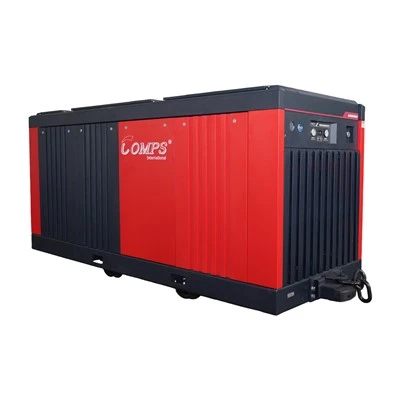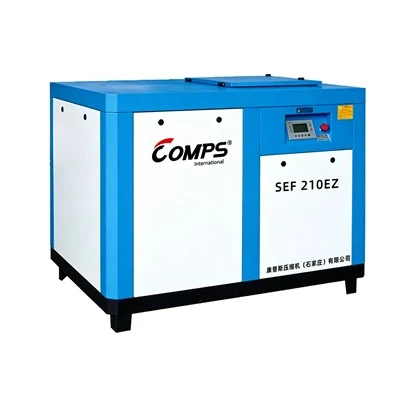
Hey there! As a supplier of Low Pressure Screw Air Compressors, I often get asked about the power consumption of these nifty machines. So, I thought I'd dive deep into this topic and share everything I know.
First off, let's understand what a low-pressure screw air compressor is. It's a type of compressor that uses two meshing helical screws to compress air. These compressors are great for a variety of applications where lower pressures are required, like in some manufacturing processes, pneumatic tools that don't need high pressure, and even in some HVAC systems.
Now, the power consumption of a low-pressure screw air compressor depends on several factors. One of the main factors is the compressor's size. Just like with cars, bigger compressors generally consume more power. A larger compressor has to work harder to move and compress more air, so it needs more energy to do so. For example, a small low-pressure screw air compressor used in a small workshop might have a relatively low power consumption, maybe around 5 - 10 kilowatts. On the other hand, a large industrial - scale low - pressure screw air compressor could consume 50 kilowatts or even more.
Another important factor is the pressure level it's set to operate at. The higher the pressure you want the compressor to achieve, the more power it will use. This is because compressing air to a higher pressure requires more force, and that force comes from the electrical energy the compressor consumes. If you set your low - pressure screw air compressor to operate at the lower end of its pressure range, it'll use less power compared to when you set it closer to its maximum pressure capacity.
The efficiency of the compressor also plays a huge role in power consumption. A well - designed and maintained compressor will be more energy - efficient than an old or poorly maintained one. Newer models often come with advanced technologies that help reduce energy waste. For instance, some low - pressure screw air compressors use variable speed drives (VSD). With a VSD, the compressor can adjust its speed according to the actual air demand. So, if the demand for compressed air is low, the compressor can slow down and use less power. In contrast, a fixed - speed compressor will keep running at the same speed regardless of the air demand, which can lead to higher power consumption.
Let's talk about the different types of low - pressure screw air compressors and how their power consumption varies.
If you're looking at an Explosion Proof Screw Air Compressor, these are designed for use in hazardous environments where there's a risk of explosion. They usually have additional safety features, which can increase their power consumption slightly compared to standard low - pressure screw air compressors. However, the extra power is a small price to pay for the safety they provide.
Oil Injected Screw Air Compressors are another common type. The oil in these compressors helps with lubrication, sealing, and cooling. While the oil injection process itself doesn't consume a huge amount of power, it can contribute to overall efficiency. An efficient oil - injected compressor can actually have lower power consumption compared to some other types because the oil helps reduce friction between the screws, allowing the compressor to run more smoothly.
Inverter Two Stage Screw Air Compressors are quite energy - efficient. The two - stage compression process allows for better compression ratios, which means the compressor can achieve the desired pressure with less power. The inverter technology also helps in adjusting the motor speed according to the air demand, further reducing power consumption.
Electric Driven Air Compressors are the most common type of low - pressure screw air compressors. The power consumption of these compressors is directly related to the electrical energy they draw from the grid. As I mentioned earlier, factors like size, pressure setting, and efficiency all affect how much electricity they use.
And then there are Low - Pressure PM Inverter Air Compressors. These are some of the most energy - efficient options out there. The permanent magnet (PM) motor in these compressors is more efficient than traditional motors, and the inverter technology allows for precise control of the motor speed. This combination results in significant power savings, especially in applications where the air demand fluctuates.
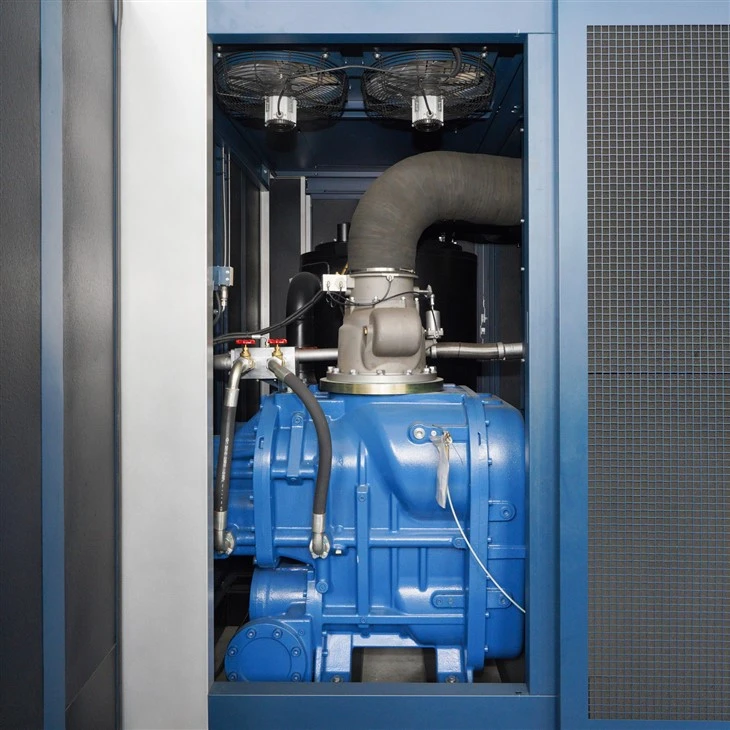
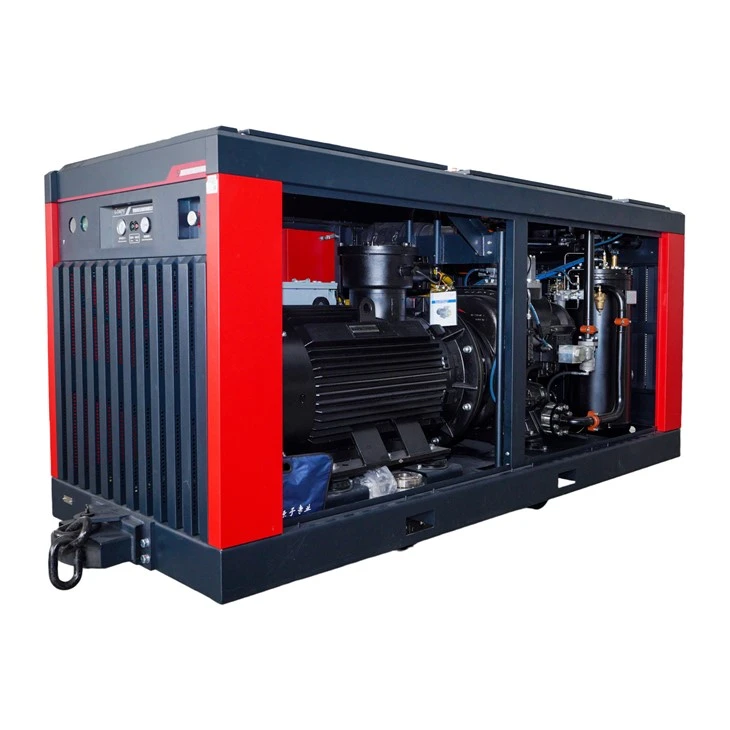
So, how can you calculate the power consumption of a low - pressure screw air compressor? Well, it's not an exact science, but you can use a rough estimate. First, you need to know the compressor's power rating, which is usually given in kilowatts (kW). If the compressor runs continuously at its full power rating, the power consumption in kilowatt - hours (kWh) is simply the power rating multiplied by the number of hours it runs. For example, if a compressor has a power rating of 10 kW and runs for 8 hours a day, the daily power consumption is 10 x 8 = 80 kWh.
However, in real - world scenarios, compressors don't always run at full power. They often cycle on and off depending on the air demand. To get a more accurate estimate, you can look at the compressor's duty cycle. The duty cycle is the percentage of time the compressor is actually running. For instance, if a compressor has a 50% duty cycle and a power rating of 10 kW, and it runs for 8 hours a day, the power consumption would be (10 x 8) x 0.5 = 40 kWh.
Reducing the power consumption of your low - pressure screw air compressor is not only good for your wallet but also for the environment. Here are some tips:
- Proper maintenance: Keep your compressor well - maintained. This includes regular oil changes (for oil - injected compressors), cleaning the filters, and checking for any leaks. A well - maintained compressor will run more efficiently and use less power.
- Optimal pressure settings: Set the compressor to the lowest pressure that still meets your application requirements. As I mentioned earlier, higher pressures mean more power consumption.
- Consider a VSD compressor: If your air demand fluctuates, a variable speed drive compressor can save you a lot of energy. It can adjust its speed according to the demand, so you're not using more power than you need.
If you're in the market for a low - pressure screw air compressor and want to learn more about power consumption or any other aspect, don't hesitate to reach out. We're here to answer all your questions and help you find the best compressor for your needs. Whether it's for a small business or a large industrial operation, we've got you covered. Contact us to start a conversation about your air compression requirements and let's find the perfect solution together.
References
- [1] "Compressed Air Systems Handbook" - A comprehensive guide on air compressors and their operation.
- [2] "Energy - Efficient Compressed Air Systems" - Research paper on reducing power consumption in air compressors.